
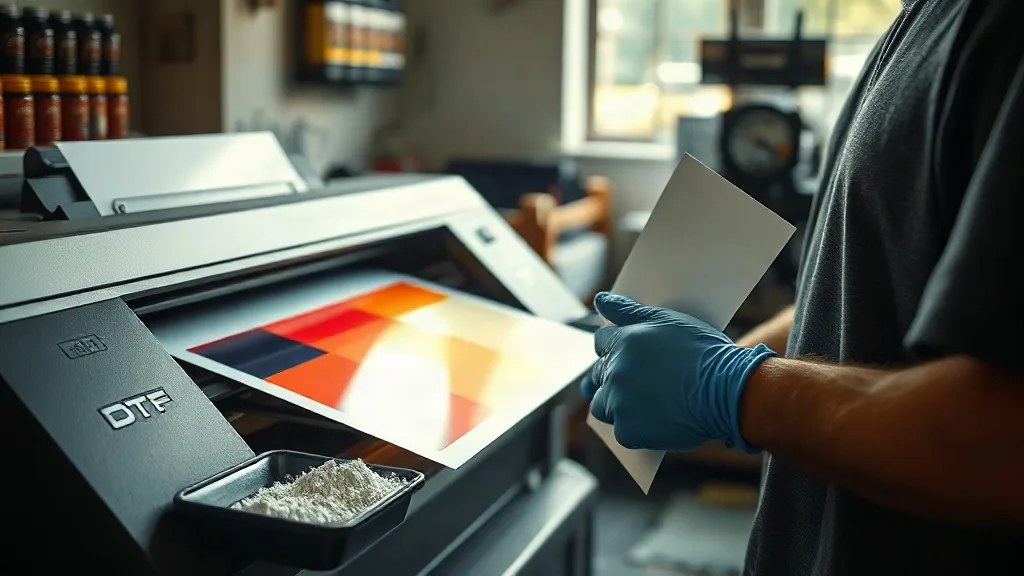
Most print shops spend hours debating heat press temperatures and film brands, yet the two components that quietly decide whether a dtf transfers job lasts past the third wash are ink and powder. Get them wrong and you'll see cracking, dull color, or a plasticky hand feel that customers notice immediately. Get them right and the rest of the process becomes far more forgiving.
This guide isn't another overview of the whole DTF workflow. It zooms in on the ink and adhesive powder pair, the part of the process most tutorials gloss over. If you've ever wondered why two shops using the same film and press can produce wildly different results, the answer usually lives in this pairing.
Why Ink and Powder Decide the Print
DTF printing works by jetting water-based pigment ink onto a PET film, then dusting the wet image with a thermoplastic adhesive powder. The powder fuses to the ink, the film is cured, and the whole sandwich is pressed onto fabric. The ink carries the color; the powder carries the bond. If either one is off, the print fails in a predictable way.
Weak or expired ink produces washed-out color that never reaches full density, no matter how many passes you run. Powder that's too coarse leaves a gritty texture; powder that's too fine can dust off before curing. And if the ink and powder aren't chemically compatible, the cured layer can turn brittle and crack along the first fold.
Think of it this way: the ink is the paint, the powder is the glue, and the film is the canvas. Any shop serious about dtf quality should treat all three as a system rather than shopping for each in isolation.
Choosing the Right Ink for Your Shop
Not all DTF inks are created equal, and the differences matter more than the label suggests. Here's what to look at before you commit to a brand.
Pigment Concentration and Color Gamut
Higher pigment load means richer color at lower ink laydown, which saves money and reduces the risk of oversaturation. Cheap inks often rely on extra carrier fluid to hit a target volume, so you end up printing more to get the same density. Ask suppliers for the pigment percentage and, more importantly, run a test print of a color chart on your own printer before buying in bulk.
Viscosity and Printer Compatibility
Ink viscosity affects how cleanly the printhead fires. An ink that's too thick can cause misfires and banding; too thin and you'll see satellite droplets. Always match ink to your printer model and the printhead technology it uses. Mixing brands mid-cartridge is a recipe for clogs, so flush the lines properly if you switch.
Shelf Life and Storage
Most DTF inks have a shelf life of six to twelve months once opened. Store them in a cool, dark place, keep caps tight, and rotate stock so older bottles get used first. If you notice sediment at the bottom, shake gently before use. Ink that has separated or smells off should be discarded, not rescued.
The Powder Puzzle: Mesh Size, Chemistry, and Cure
Adhesive powder is where many shops cut corners, and it shows. The powder's job is to melt into the ink, form a flexible bond with the fabric, and survive repeated washing without yellowing or stiffening.
Mesh Size Matters
Powder is graded by mesh size, typically between 80 and 200. Finer powders (higher mesh numbers) give a softer hand feel and finer detail, but they can be harder to apply evenly and may dust off before curing. Coarser powders bond aggressively but can feel gritty on lightweight fabrics. Many shops keep two grades on hand: a fine powder for detail work and a medium powder for large solid areas.
Chemistry and Compatibility
Most DTF powders are polyurethane-based, but formulations vary. Some are optimized for stretch fabrics, others for cotton blends. If you print on performance wear, ask your supplier whether the powder is rated for elastane or polyester. Incompatible chemistry shows up as cracking at stress points or a cloudy haze on dark garments.
Curing: The Step That Makes or Breaks It
Powder must be cured at the right temperature for the right time. Under-cured powder stays tacky and won't bond; over-cured powder turns brittle and yellows. Follow the ink and powder manufacturer's cure schedule, and verify with a simple fold test: cure a sample, fold it sharply, and check for cracking. If it cracks, adjust time or temperature before running production.
Matching Ink and Powder for Consistent Results
The best results come when ink and powder are treated as a matched pair. Here's a practical routine that keeps quality stable across jobs.
- Test every new batch. Print a small color and detail chart whenever you open a new ink bottle or powder bag. Compare against a reference print kept in a drawer.
- Keep a log. Note batch numbers, cure settings, and any issues. When something goes wrong, the log tells you whether it's the material or the process.
- Don't mix brands blindly. If you switch ink or powder suppliers, run a full test cycle before committing a customer order.
- Control humidity. Powder absorbs moisture, which affects flow and cure. Store it sealed with a desiccant pack and avoid opening bags in damp conditions.
Shops that follow this routine tend to see fewer reprints and happier customers. It also makes it easier to quote jobs confidently, since you know what your materials will do.
Common Ink and Powder Mistakes (and Quick Fixes)
Even experienced operators slip up. Here are the issues we see most often and how to correct them without scrapping the whole run.
Print Looks Dull or Washed Out
Likely causes: low pigment ink, incorrect ICC profile, or insufficient ink laydown. Check your printer settings first, then test a fresh ink batch. If the problem persists, your profile may need rebuilding for the current ink lot.
Powder Won't Stick to the Ink
This usually means the ink was too dry before powdering. DTF ink needs to stay tacky long enough for powder to adhere. Reduce the time between printing and powdering, or check that your printer's platen heater isn't over-drying the film.
Cracking After Washing
Cracking points to under-cured powder, incompatible powder for the fabric, or too thick an ink layer. Verify cure settings, confirm the powder is rated for the garment, and reduce ink laydown if the print feels heavy.
Yellowing on White Garments
Yellowing often comes from over-curing or from powder that's past its shelf life. Lower cure temperature slightly and check powder freshness. Store powder away from heat and moisture.
When to Source Locally vs. Online
If you're searching for dtf transfers near me, local suppliers can be a lifesaver for urgent jobs, but they're not always the best fit for every shop. Local sourcing gives you faster turnaround and the ability to inspect film and powder in person. Online suppliers often offer better pricing on bulk ink and powder, plus a wider range of mesh sizes and formulations.
A practical approach: keep a small local reserve for emergencies and buy your main volume online from a supplier with consistent batch testing. Many shops also join buying groups to split shipping costs on heavy powder orders.
Building a Material System That Scales
As your shop grows, material management becomes a competitive advantage. Standardize on one ink line and one or two powder grades, then build your profiles and cure schedules around them. Train staff on the test routine and keep reference prints visible at the press. When you bring in a new material, run it through the same checks before it touches a customer order.
This discipline pays off in fewer reprints, faster quotes, and prints that customers trust. Ink and powder may be the quiet ingredients, but they're the ones that decide whether your dtf transfers earn a repeat order.
Frequently Asked Questions
How often should I replace DTF ink?
Replace ink when it reaches its shelf life (typically six to twelve months after opening) or when test prints show reduced density. Store it cool and dark, and rotate stock so older bottles are used first.
Can I use any adhesive powder with any DTF ink?
Not always. Most polyurethane powders work with standard DTF inks, but performance fabrics and stretch blends may need a specific formulation. Always run a test print and wash test before production.
What's the best way to store powder?
Keep powder sealed in its original bag with a desiccant pack, in a cool, dry place away from direct sunlight. Avoid opening bags in humid conditions, and use within the manufacturer's recommended window.
Why does my print feel stiff after pressing?
Stiffness usually comes from too much powder or too thick an ink layer. Use a finer mesh powder, reduce ink laydown, and ensure the press settings match the film and fabric.
How do I test a new ink or powder batch quickly?
Print a small color and detail chart, cure it per the manufacturer's schedule, press it onto a scrap of your most common fabric, and run a fold test plus a wash test. Compare against your reference print before approving the batch.