
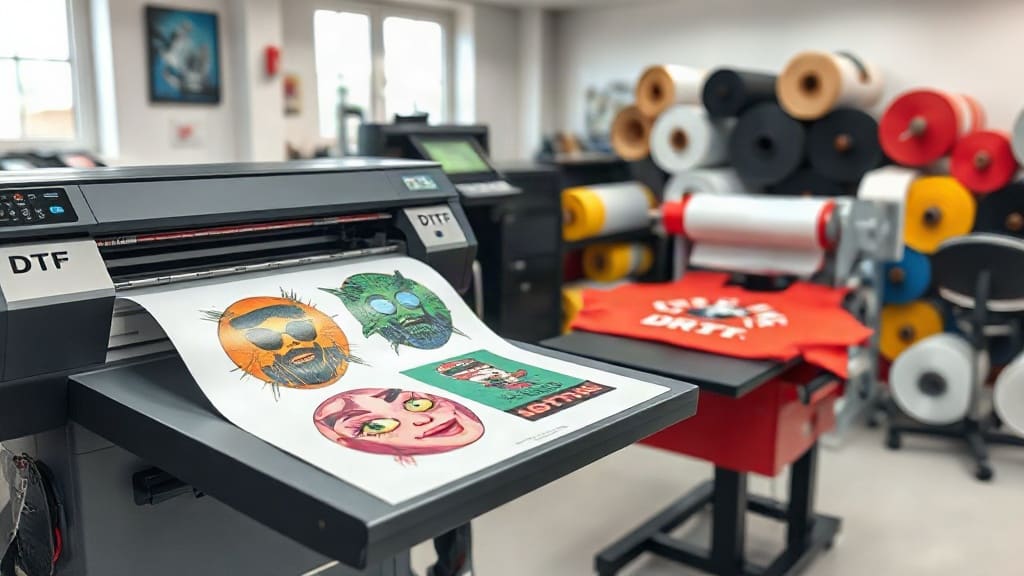
Starting a custom apparel business has never been more accessible than it is today. Thanks to DTF transfers, you can create vibrant, durable designs on shirts, hoodies, bags, and more without investing in expensive screen printing equipment. But like any business, success doesn't happen overnight. You need a solid plan, the right tools, and a clear understanding of the market. In this guide, I'll walk you through everything I've learned from starting and growing my own DTF transfer business, including the pitfalls to avoid and the strategies that actually work.
What Are DTF Transfers and Why Are They So Popular?
DTF transfers are printed designs on a special film that can be heat pressed onto fabric. Unlike screen printing, there's no need for screens or setup; you can print a single design or a hundred with the same ease. The process involves printing onto PET film with a special adhesive powder, then curing the ink and powder to create a transfer. When you heat press it onto a garment, the design adheres permanently, and it feels soft to the touch.
The popularity of DTF transfers has exploded for good reasons. They work on a wide range of fabrics, including dark colors, and they maintain their vibrancy through many washes. For small business owners, the low startup cost and versatility are game changers. You can produce custom orders in minutes, making it perfect for print-on-demand services, events, and personalized gifts.
Essential Equipment for Starting Your DTF Transfer Business
To produce quality DTF transfers, you need reliable equipment. Here's a breakdown of what you'll need and what I recommend based on my own experience.
DTF Printer
Your printer is the heart of your operation. You have two main options: convert an existing inkjet printer or buy a dedicated DTF printer. Converted printers are cheaper but can be finicky. I recommend starting with a budget-friendly dedicated DTF printer from a reputable brand. Look for one with a built-in vibrator and powder applicator to streamline your workflow. Many entry-level models cost between $1,500 and $3,500.
Heat Press
A good heat press is non-negotiable. You need one that applies even pressure and heat. For DTF transfers, a clamshell or swing-away press of at least 15x15 inches works well. I've used both, and the swing-away type gives you more control because the top element moves away completely, allowing you to position the garment precisely. Expect to pay $300 to $800.
DTF Film, Ink, and Powder
You'll need PET film (available in matte or glossy), DTF ink (usually CMYK plus white), and hot melt adhesive powder. Don't skimp on these materials; they directly affect transfer quality. I learned that cheap film can cause curling and poor ink adhesion. Always buy from a trusted supplier. A starter pack of film, ink, and powder will cost around $200.
Step-by-Step DTF Transfer Process
Mastering the process is crucial. Here's a simplified workflow that I use every day:
- Design: Create or import your design in a software like Adobe Photoshop or Illustrator. Remember to mirror the image horizontally because it will be transferred face down.
- Print: Print the design onto the PET film using your DTF printer. The printer lays down white ink as a base, then the CMYK colors on top.
- Apply powder: While the ink is still wet, cover the printed area with hot melt adhesive powder. If your printer doesn't have a built-in powder applicator, you can do this manually by shaking powder over the print and shaking off the excess.
- Cure: Pass the film through a powder curing oven or use a heat press with a Teflon sheet to melt the powder. The typical curing temperature is around 190°C (375°F) for about a minute.
- Press: Place the transfer on your garment, film side up. Cover with a Teflon sheet and press with your heat press at 170°C (340°F) for 10-15 seconds with medium pressure.
- Peel: Wait for the film to cool slightly, then peel it off to reveal your design. For best results, do a warm peel.
Costs and Pricing Strategies
One of the biggest advantages of DTF transfers is the low barrier to entry. Here's a realistic breakdown of startup costs:
- Printer (dedicated DTF): $2,500 (average)
- Heat press: $500
- Film, ink, powder, and other consumables: $300
- Software (if you don't have it): $0 to $600
- Miscellaneous (scissors, tape, cleaning tools): $100
That brings your total to roughly $3,400, which is remarkably low compared to screen printing. To price your transfers, calculate the cost per transfer (film, ink, powder, electricity) and add your desired profit margin. A good rule of thumb is to charge $5 to $10 for a simple transfer, but you can adjust based on complexity and market demand. For custom apparel, you'll typically add the cost of the garment, so a shirt might sell for $20 to $30.
Marketing Your DTF Transfer Business
Having great equipment and skills is only half the battle. You need customers. Here are the marketing strategies that have worked for me and other successful DTF transfer business owners.
Build a Strong Online Presence
Create a website showcasing your work. Use platforms like Shopify to set up an online store where customers can upload their designs and order transfers. Optimize your site for search engines by using keywords like "custom DTF transfers" and "DTF transfer printing." Don't forget to showcase your products on social media platforms like Instagram and TikTok, where visual content thrives.
Leverage Print-on-Demand Marketplaces
List your services on Etsy, Amazon, and specialized print-on-demand platforms. Many business owners look for reliable DTF transfer suppliers to fulfill their orders. By offering high-quality transfers, you can build a B2B clientele. I started by fulfilling orders for local boutiques and quickly expanded to online sellers.
Network with Other Entrepreneurs
Attend local business meetups, join Facebook groups, and participate in online forums related to custom apparel. Building relationships can lead to referrals and partnerships. For instance, you might partner with a graphic designer who can recommend your services to their clients.
Common Mistakes to Avoid
Even experienced printers make mistakes. Here are some pitfalls I've faced and seen others face, so you can avoid them:
- Skipping test prints: Always test on a scrap piece of fabric before running a full batch. Different fabrics react differently to heat and pressure.
- Using poor-quality materials: As I mentioned, cheap film and ink can ruin your transfers. Invest in quality from the start.
- Ignoring maintenance: Clean your printer heads regularly and calibrate your heat press to ensure consistent results.
- Underpricing your work: Many newbies undercharge, thinking they'll attract customers. But you want to build a sustainable business, so price your transfers to cover costs and time.
Scaling Your DTF Transfer Business
Once you have a steady flow of orders, you can think about scaling. This might involve hiring employees to handle printing while you focus on sales, or investing in additional equipment to increase capacity. You could also expand your product range to include more than just transfers, such as offering finished garments. The key is to reinvest your profits wisely and keep improving your processes.
Frequently Asked Questions
How much does it cost to start a DTF transfer business?
You can start with as little as $3,000 to $5,000. This includes a dedicated DTF printer, heat press, and initial supplies. If you're on a tight budget, you might consider a converted printer, but I'd advise against it for long-term quality.
How long does a DTF transfer last?
With proper application, a DTF transfer can last as long as the garment itself. It withstands washing and wearing well. To maximize longevity, follow the care instructions: wash inside out in cold water and tumble dry low.
Can I use DTF transfers on any fabric?
DTF transfers work best on cotton, polyester, and blends. They also adhere to nylon and some other synthetics, but you should test first. For stretchy fabrics, use a stretchable DTF film to prevent cracking.
Do I need a dedicated DTF printer or can I convert my existing one?
While you can convert an inkjet printer, it's risky. Dedicated DTF printers have features like built-in powder application and are designed to handle the thicker ink and film. I recommend investing in a dedicated printer to ensure consistency and avoid breakdowns.
What's the difference between DTF and DTG printing?
DTG (direct-to-garment) prints directly onto the shirt, whereas DTF transfers print onto film and then transfer. DTF is more versatile for different fabric types and dark colors, and it allows for batch production since you can print multiple transfers at once.
Starting a DTF transfer business is an exciting venture with great potential. With careful planning, quality equipment, and effective marketing, you can build a profitable business from home. Remember to focus on quality and customer service, and you'll be amazed at how quickly you can grow.